Assume v. Presume

Similar confusion over program / programme. For me, the former is a computer program and the latter is a TV programme and also a programme of events for a concert or fete etc.
 
I have no idea what you mean. English is just English, AFAIK. You don't need to qualify it unless it's some foreign thing, like American English etc.
 
Was agreeing that ...mme is proper English, unlike Amercian English - so, thereby needing to say 'British English'. Then 'English English' is a take on the fact that 'members' of Britain no doubt don't like being bundled into 'British English'... even parts of England don't like being bundled into being 'English' nor speaking it.
 
Floppy disk - because they were also known as a diskette, maybe.
Yes. Then, by extension, disk became the accepted spelling for 'hard disk'. But we've been this way before – from the Glossary:

In case any "traditional spellers" quibble at 'disk':- like 'program', 'disk' is an accepted spelling in computer terminology and has its roots in the abbreviation for 'diskette'. In normal English 'disc' remains correct for describing a flat circular object, and 'programme' is a planned series of events.
 
I don't doubt the difference. Indeed, I have used the spelling "program" to refer to a list of computer instructions for the past 50 years. My minor, joking, gripe was with " 'programme' is a planned series of events.". A computer program is a planned series of events (on a good day). The "planned series of events" isn't a unique definition of programme as it also applies to program.
 
I don't doubt the difference. Indeed, I have used the spelling "program" to refer to a list of computer instructions for the past 50 years. My minor, joking, gripe was with " 'programme' is a planned series of events.". A computer program is a planned series of events (on a good day). The "planned series of events" isn't a unique definition of programme as it also applies to program.
Well, as this AvP, I shall take issue with the distinction between an event and an instruction. A programme tells you what you're getting; a program tell you what to do.
 
Then, by extension, disk became the accepted spelling for 'hard disk'.
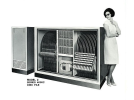
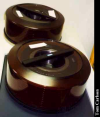
Pretty sure hard disk drives - remember those huge things in cabinets like washing machines - pre-dated floppy disks or other diskettes by a long way. I always assumed "disk" was just the American spelling of disc, as program was to programme.
 
Well, as this AvP, I shall take issue with the distinction between an event and an instruction. A programme tells you what you're getting; a program tell you what to do.
Hmm. A program tells the computer what to do. The computer may tell you what you're getting. In the Humax Aura's case sometimes sod all (I censored that!)
A program is more a planned set of instructions - in code (rather than events), though. :)
At the machine code level you may need to write an interrupt service subroutine which responds - to an event - a keypress, a mouse movement, the insertion of a usb device etc.

Anyway, in British English (just to upset prpr) it's a computer program, a television programme, and a theatre (not theater) programme.
 
Back
Top