Picking up on some of the earlier points about EVs and seemingly intractable problems (as defined by the Daily Mail and the like)...
Our Ford Focus became unreliable and getting expensive for fixes in 2021. It had done well, it was from 1999, but its time was up. We ummed & ahhed about whether to stick with petrol or go electric. Things were still a bit new. Obliviously there are some drivers who would say "I've been in an EV since 2010 ...and it's fine", but they were always people with driveways, charging at home.
We live in a terrace - the problem!
We live in a west-London borough - part of the solution.
Charging has got a lot better between when we bought our Kia in 2021 and today.
Chargers in street lights won't work as you would need a street light for every parking sized bay in the street - it would turn night in to day I suppose!
Not at all true. Our car does over 250 miles from a full battery. Think how infrequently you need to "fill up". I put it on charge about 3-4 times in a month. The UK average annual mileage is reported at around 7000 miles, that's about 580 miles per month - or 2-3 charges. My street is about 80 houses. If every home had an EV they would need ~190 charging sessions in a month, that would be 6 per day. Six chargers should handle that even if everyone wants to charge at the same cheaper time (overnight) and not fit a few charge sessions in during the day.
We don't have 6 chargers in our street - we have 4. Obviously the EV proportion isn't that great yet.
The original lamp post sockets were done a bit stupidly. The council website had asked for requests from users and they considered where to install them, often on a lamp near that person's home. Predictably it was difficult to park in the right place to get a charge outside people's homes. They've learned, now they think about positions near the end of streets, were nobody's house faces that part of the street, nobody thinks that's "my" spot! Often they pick the end of the street, where there is the side of house which faces the adjoining street. Sometimes they site them on bit of road which connects between terraced streets. These are the places where people don't tend to park, yet they are often no more than 2-5 minutes away. My neighbour drives an electric black cab. He charges over the pavement and uses some yellow and black striped ducting. When we got the car the chargers were rare and only on lamp posts. The rapid expansion of public slow chargers has been on some more lamp posts and dedicated charging pillars.
I liked the idea of the lamp post charging. They don't add any new clutter of "street furniture", but you have to remote-control them from an app because there's just a socket and a tri-colour LED to show state. There's no screen, no contactless no overheads! There's a QR code so you can scan for the right address, but the app can use your location anyway. It seems a neat low ovearhead piece of tech, a little slower at 5kW instead of 7kW, but it is using the surplus capacity of the street lamps' power circuits. The advantage of dedicated charging pillars is that they can be located more freely to match ends of street where people aren't parking. The pillars usually are higher tech, with RFID card readers and displays, but obviously that means more capatal cost.
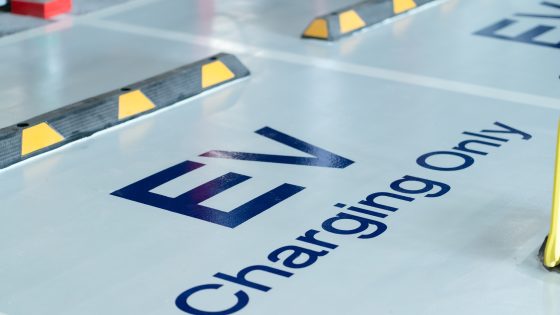
So we have gone from 2 lamp posts which were in streets 15 minutes away (in 2021), to a situation today with 4 in our street and a further 2 in each of the short link roads between our road and the parallel road. Originally the parking by the lamp posts was unreserved, so it could be difficult, but they made those spots for charging only. The parallel street has a couple of lamp posts with charging on them, but most of that street is bigger houses with private parking out front - so they tend to do their own cheaper charging at home.
People who charge at home are already using electricity at off-peak rates because there is an abundance of power then. EVs are actually not the problem to the grid that deniers try to make out - quite the reverse, they are a solution to the problem that the grid and generators have to deal with a very uneven load between minimum overnight and a peak around 17:00-19:00. EV owners can pick their time of charging and even the day. Sometimes, like this weekend, there is a lot of wind and the price falls, at other times there might be low wind and cold weather and the price is high because it requires more expensive fuels and power stations to run-up to meet the demand. EV owners can choose to top up on low price dates/times and run the car lower on any run of expensive days.
Lots of people don't see the electricity price fluctuations because they are on "fixes". I chose a tarrif from Octopus which is called "Tracker" - each day is different, depending on demand and what the supply-side costs are. Yesterday electricity was 22.39p/kWh, today it is 17.38 and tomorrow's figure is 15.24p (the price for tomorrow comes out around midday..... so I'll not do the laundry today, because I can see that tomorrow the cost and tumbling will be cheaper!
If I could charge at home I would pick my days. Yes I could save miney by charging at home, but there's the installation cost. Right now I can charge off-peak on public chargers for 43p/kWh. A full tank would cost £27.52 and take me 270 miles - That's about 10p per mile.
I'll settle for that vs. petrol prices for the enjoyability of driving electric !
Bringing it back to the "impossibility" of an EV without home charging... Some of the early adopters of EVs have propagated this bit of FUD... they were the people who bought early, with cars which had a range of around 100 miles and they could of course charge at home and had to regularly, possibly plugging in habitually for an overnight charge. For me, I have a car which can get me from home in west London to Devon regularly, without stopping. I arrive with ~50 miles or more of range left, so I am likely to fill up within a few days, but not urgently. Because I always have to use public chargers I don't really have any issues with tapping to pay or using an app. Sometimes I leave home with less than 100% and use a rapid charger on the way. I used to stop and use a Tesla charger (I don't own a Tesla) at the mid-point of my frequent long journey. That Tesla rapid charger used to be nealy the same price as slow street charging, but after Elon Musk went total tw@t I avoid! Filling up whilst stopping for evening snack and coffee meant tha tI reached Devon with enough left that I didn't need more juice untl before the return.
In Devon I experience what is probably true for a lot of the country, the councils have not yet worked with charge point operators to get public charging installed
for their residents. There tend to be "rapid" chargers in strategic places, but not the back streets where you find terraced housing or flats. Sadly I bet many councils will repeat the mistakes that London boroughs were making in 2021, before getting it right :-(
In Devon I can get an overnight charge at similar price to home, if I walk 25 minutes. If it rains I can use the more expensive "rapid" chargers 5 minutes away in a car park (free parking overnight or if charging).
Sorry for the long post - I wanted to put to bed the ideas that
a) There will never be enough places to charge in domestic streets
b) The grid will be overwhelmed by the load of EVs (when in fact they are a useful distributed storage for power when it is abundant and not charging when the power is short/expensive)
and finally:
c) My car weighs 1757 kg vs. BMW X4 2200-2500; LR Discovery 2200+ (unladen weights - the sort that tends to be parked in multi-storey car parks and DOES NOT present a weight risk!)






 )
)