Media mistakes

Is that true? I would take it to mean half the thermal energy. Is that how Kelvin is calibrated?
That's a fair question, that I don't have an answer for. Kelvin is calibrated for 1 degree change is the same as 1 degree change in celsius, so I doubt very much half the number is half the thermal energy.
 
Isn't 0*K a state of having zero thermal energy? Particles stop moving? Happy to be corrected. Amongst all the measurements temperature is almost certainly the most meaningless, as it can't generally be defined (AFAIK), yet also the most common as in terms of our everyday life we recognise what a certain temperature means. Totally agree that multiplying or dividing non-K temperatures is utterly meaningless. Yet also a trap people fall into because, well they're numbers aren't they! Let's divide them!

 
Amount of thermal energy is not the same as temperature, the proportionality depends on the specific heat capacity of the medium. A very diffuse medium can have a very high temperature but contain little heat.

Kelvin is the thermodynamic temperature scale, and each additional Kelvin is the result of adding the same increment of energy to a standard medium. The only reason it coincides with Celsius + 273.15 is because that's how Celsius got standardised after the event. Originally Celsius was based on the supposedly linear expansion of a liquid with temperature, with 0 and 100 set arbitrarily as more-or-less the melting point and boiling point of water. Fahrenheit is even more arbitrary.
 
Last edited:
But can you quote the temperatures of the sun's surface or a blast furnace? I can't. Would have been more helpful, but wordier, if the temperatures of the items being compared had been given.
 
Fahrenheit is even more arbitrary.
It is no more or less arbitrary than Celsius. 0F is meant to be the freezing point of sea water (but how salty?), and 100F is meant to be body temperature but they used an animal to set that I believe so humans are at roughly 98F. The 0 and 100 points are less easy to specify and reproduce than Celsius that's the main problem.
 
But can you quote the temperatures of the sun's surface or a blast furnace? I can't. Would have been more helpful, but wordier, if the temperatures of the items being compared had been given.
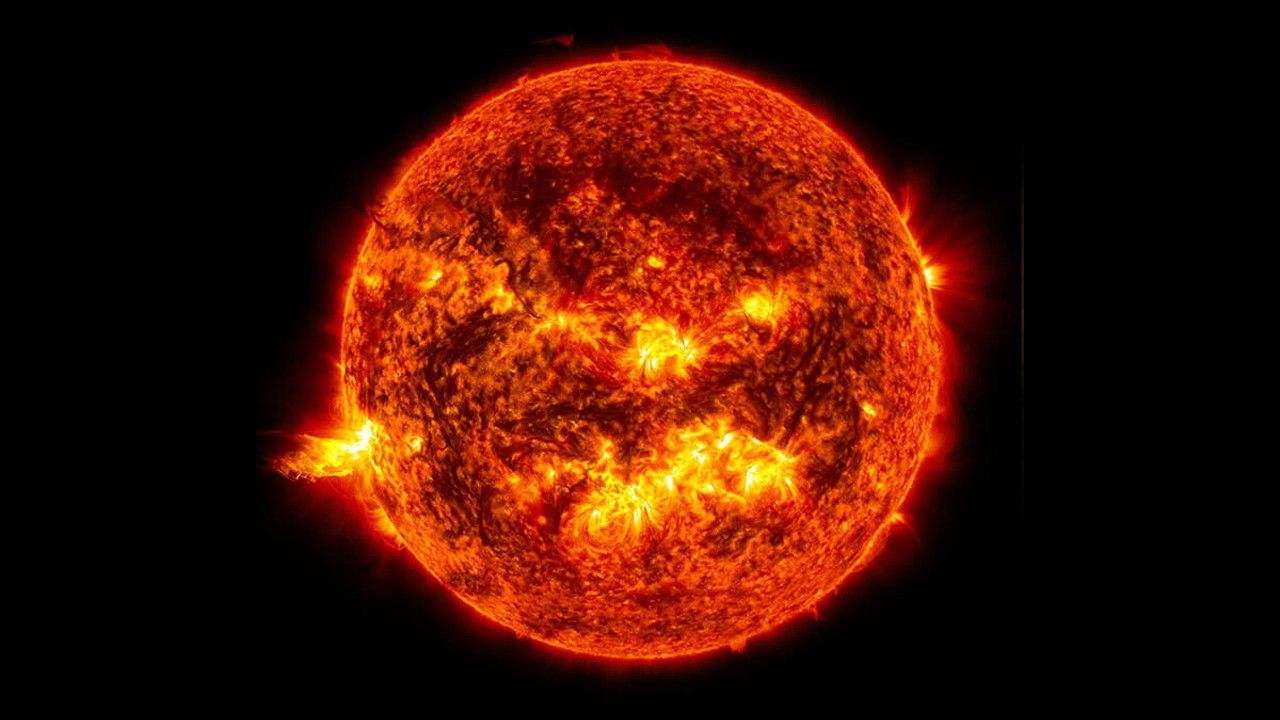
Off the top of my head the Sun's photosphere is about 5,000K (that's the reason the colour-temperature of daylight is 5,000º). I'm only guessing the temperature of a blast furnace, but I reckon it must be about 2,500K.

Edit: oh, a quick google says 1,600ºC. OK, "hotter than a blast furnace" then.
 
Then there's a further repeat by the Daily Mail's "Executive Science Editor"
They were relying on a three inch heat shield to protect them from a seating 2,700C heat - roughly half the surface temperature of the Sun.
Are we in an alternate universe where we are wrong and the science journalists are correct?
 
What I found odd before it was explained is that the surface of the sun is a lot, lot hotter than its centre,
I don't think you've got that right. The corona, not the "surface" (which usually means the visible surface, AKA photosphere) is the hot bit (but very diffuse and therefore with little heat).
 
GOV.UK - Standards of vision for driving
You must be able to read a number plate from 20 meters away (about the length of 5 parked cars). You can wear your glasses or contact lenses if you use them for driving.

Gas or electric meters? Other meters are available!
 
I always think of that as just about the length of a cricket pitch. Which means some umpires, past and present, should not be driving!
 
GOV.UK - Standards of vision for driving
You must be able to read a number plate from 20 meters away (about the length of 5 parked cars). You can wear your glasses or contact lenses if you use them for driving.
Given that's a UK government document that is very sloppy indeed. Quite possibly because they have their left their PCs on default US English settings. Five parked cars?? That's very vague... Bentleys or Fiat 500s? How much space between them??!
 
Back
Top