

You are using an out of date browser. It may not display this or other websites correctly.
You should upgrade or use an alternative browser.
You should upgrade or use an alternative browser.
What is this logo on the HDR-Fox T2 main board?
- Thread starter HugeMaximum
- Start date


Luke
Well-Knwοn Мember
A wonky L followed by and F, with the words "Lead Free" added near the bottom mean -On the HDR-Fox T2 main board (the 'main' PCB inside the box - shown here)... anyone know what the logo to the right of the Humax logo is?
View attachment 7850
Looked like LF ('L' rotated). Or it could be CF (with a square-ish 'C')... maybe they were just gagging for a Custom Firmware!
who knows what that would indicate or mean!
Last edited:

MymsMan
Ad detector
That makes senseA wonky L followed by and F, with the words "Lead Free" added near the bottom?
Who knows!
It does not appear to be a commonly used Lead Free logo, most lead free logos appear to be variations of
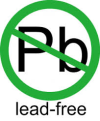
OP
HugeMaximum
Member
It is from the image here which lacks sufficient resolution. If somebody could open their box?Can you get a higher resolution image of that part of the logo?
There appears to be some tiny writing across the bottom of the L but image id too low res to be able to zoom in
Similarly google image search is unable to match on the LF logo part of the image
OP
HugeMaximum
Member
I see what you're saying... could be little writing saying "Lead Free". Just need a clearer picture...A wonky L followed by and F, with the words "Lead Free" added near the bottom?
Who knows!
Luke
Well-Knwοn Мember
Ah!I see what you're saying... could be little writing saying "Lead Free". Just need a clearer picture...
Sorry. I now see that my post was ambiguous.
I've updated post #3.
It does say "Lead Free".
It's also used on some other Humax models which also have images available online, (e.g. FVP-4000T, e.g. HDR-1000S, e.g. LP32-TDR1, e.g. PVR-9150T)). Can't immediately re-find the one that I quickly laid eyes on earlier, but these PCBs are clearer than your choice.


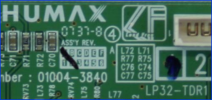
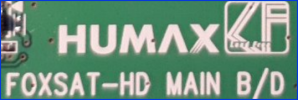
Plenty more on-line for you to search for, and download, if you want a clearer picture than the one you posted in your original post.
Last edited:
OP
HugeMaximum
Member
Bingo! Excellent detective work. It is useful to know it's lead-free if re-soldering anything.Ah!
Sorry. I now see that my post was ambiguous.
I've updated post #3.
It does say "Lead Free".
It's also used on some other Humax models which also have images available online, (e.g. FVP-4000T, e.g. HDR-1000S, e.g. LP32-TDR1, e.g. PVR-9150T)). Can't immediately re-find the one that I quickly laid eyes on earlier, but these PCBs are clearer than your choice.
View attachment 7856
View attachment 7854
View attachment 7853
View attachment 7855
Plenty more on-line for you to search for, and download, if you want a clearer picture than the one you posted in your original post.

Black Hole
May contain traces of nut
No, it's not useful to know. We (non-industry) are not trapped in those rules, and leaded solder is still available for repair of pre-lead-free assemblies (not to mention military and specialised applications). Leaded solder is much easier to use, and works regardless of whether what you're working on is lead-free.It is useful to know it's lead-free if re-soldering anything.
On the other hand, lead-free is a pain in the arse under anything less than carefully controlled conditions, less reliable, and is incompatible with anything with lead in it. Using lead-free tools on something leaded contaminates them. If you're going lead-free, it's a total commitment.
For anything home-brew, use tin-lead solder. I have a lifetime stock!
OP
HugeMaximum
Member
I say yes, you say no...No, it's not useful to know
So, based on what you said above (I've put in bold) - it is useful to know!On the other hand, lead-free is a pain in the arse under anything less than carefully controlled conditions, less reliable, and is incompatible with anything with lead in it. Using lead-free tools on something leaded contaminates them. If you're going lead-free, it's a total commitment.
For anything home-brew, use tin-lead solder. I have a lifetime stock!
Black Hole
May contain traces of nut
:sigh:
You can use leaded solder on a lead-free board, but the board then becomes leaded. You can't use lead-free solder on a leaded board. Always use leaded, and then you don't care one way or the other.
You can use leaded solder on a lead-free board, but the board then becomes leaded. You can't use lead-free solder on a leaded board. Always use leaded, and then you don't care one way or the other.

prpr
Well-Known Member
He says stop, and you say go, go go...I say yes, you say no...
OP
HugeMaximum
Member
You got it... that was the tune in my headHe says stop, and you say go, go go...
OP
HugeMaximum
Member
That's useful to know:sigh:
You can use leaded solder on a lead-free board, but the board then becomes leaded. You can't use lead-free solder on a leaded board. Always use leaded, and then you don't care one way or the other.
It's also useful to know to adjust soldering iron temperature to the higher level required by lead-free... e.g. when unsoldering something from such a board. Very useful, actually
Black Hole
May contain traces of nut
Not necessary if you wet it with leaded for rework. Increasing your soldering temperature makes damage to the component, or to the board, much more likely.
I'm glad somebody was on the right wavelength.He says stop, and you say go, go go...
OP
HugeMaximum
Member
That's a good 'tip' (if you're using the right oneNot necessary if you wet it with leaded for rework. Increasing your soldering temperature makes damage to the component, or to the board, much more likely.
I'm glad somebody was on the right wavelength.
 )... the lead-free logo is useful - so that you approach the work in the correct way!
 Owen Smith
Well-Known Member
Yes it tells you it's going to be an absolute bastard to work with, needing high iron temperature and risk to the PCB. I always use leaded solder for repairs even on lead free boards, it makes the repair easier. I melt some leaded solder into the original solder first to make removal easier.Bingo! Excellent detective work. It is useful to know it's lead-free if re-soldering anything.
Owen Smith
Well-Known Member
I find even when wetting the lead free solder with leaded for rework I still need to use a higher iron temperature than on an entirely leaded solder board.Not necessary if you wet it with leaded for rework. Increasing your soldering temperature makes damage to the component, or to the board, much more likely.